What Is Colocation Pricing Actually Made Of? Breaking Down Power, Space, and Bandwidth Costs
Behind every server colocation price is a combination of power, physical space, connectivity, redundancy, and the services that keep infrastructure running. While comparing server colocation prices sounds easy, the challenge comes in when one provider bundles power and another charges by usage.
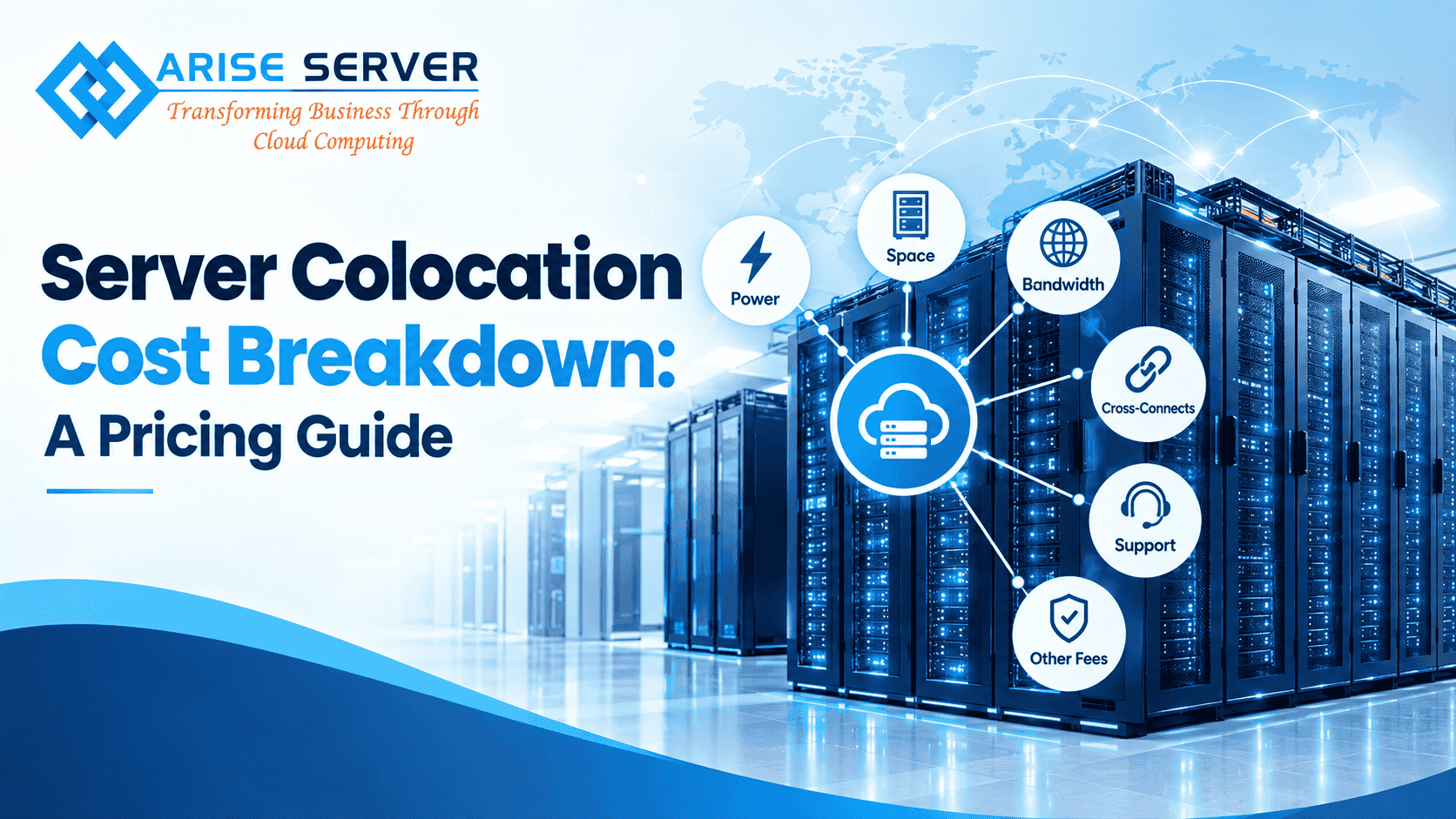
So, what is server colocation pricing actually made of? Well, the simplest way to understand it is to start with three core cost drivers. Space, power, and bandwidth. You pay for the physical room your equipment occupies, the electricity and infrastructure required to operate it, and the network capacity that connects it to your users. That’s it? Well, no, the confusion comes in when a realistic colocation cost breakdown also includes your cross-connects, remote-hand support, installation charges, insurance requirements, compliance services, redundant power feeds, and higher SLA tiers. While these extras might seem insignificant, they do hold the potential to turn an attractive headline rate into a very different total cost.
This blog aims to go beyond comparing the numbers at the bottom of two quotes, unpacking what is actually behind it, and building a colocation cost breakdown you can use to compare providers with confidence.
VPS Server Plans
An ideal VPS solution for modern projects combines strong security, high-speed performance, and flexible, scalable configurations to match your evolving requirements.
What are the three core components of colocation pricing?

So, why does one colocation quote look dramatically different from another? Well, much of the answer lies in how your provider procures the power, space, and bandwidth.
Having said that, providers can package these costs differently, so understanding each component is important before you compare the quotes.
| COMPONENT | QUESTION | TYPICAL PRICING BASIS | BIGGEST COST VARIABLES |
| Space | How much room does your equipment need? | U, rack, cabinet | Footprint, rack type, density |
| Power | How much capacity/electricity does it need? | kW, kVA, kWh, allocation | Load, consumption, redundancy |
| Bandwidth | How much network capacity does it need? | Mbps/Gbps transfer | Commitment, usage, traffic profile |
Amongst these three components, what actually changes your server colocation bill? Well, besides these three components, higher-performance hardware increases power requirements, and more users or data-intensive applications can increase bandwidth requirements. So, the real monthly cost is determined by the combination of physical footprint, power profile, connectivity requirements, and the services bundled around them.
The hidden costs that buyers often miss
One of the biggest mistakes when comparing server colocation costs that businesses make is just focusing on the number at the top of the quote. While the advertised monthly rate might cover rack space, power, and basic connectivity, hidden services like cross-connects, remote hands, installation, compliance, insurance, and premium SLAs can add up.
Here’s a list of hidden costs that businesses often miss:
⦁ Cross-connects
Physical network connections between your equipment and carrier, clouds, or other networks
⦁ Remote hands
On-site technical assistance when your team is not physically present
⦁ Setup & installation
Initial deployment, cabling, rack preparation, configuration, or onboarding
⦁ Insurance & compliance
Required coverage or additional controls
⦁ SLA upgrades
Higher availability commitments and associated infrastructure
The point is that you don’t need to compare colocation costs using the rack price alone; rather, the agenda is to build your comparison around the complete monthly recurring costs plus one-time deployment fees and usage-based charges.
How do providers bundle power, space, and bandwidth?
While most colocation providers all use one of three pricing structures, the actual difference comes down to how power, space, and bandwidth are grouped into your final bill.
Having an understanding of which structure you are being quoted is the first step to comparing offers accurately.
| PRICING MODEL | POWER | SPACE | BANDWIDTH | BEST FOR |
| All-inclusive | Fixed allocation at a flat rate | Fixed allocation at a flat rate | Capped, included | Predictable, stable workloads |
| A la carte | Billed separately | Billed separately | Billed separately | Variable or growing workloads |
| Hybrid | Baseline included, overage billed | Fixed allocation in flat rate | Billed separately | Most mid-size deployments. |
Once you know which structure a provider uses, the next step is asking what happens when you exceed the included limits.
Dedicated Server Plans
Arise Dedicated Servers deliver powerful performance, reliable infrastructure, and flexible resources for businesses, high-traffic websites, applications, and demanding workloads.
How to read a colocation quote? A Quick Checklist

There are so many times when a colocation quote looks complete on the surface but has details beneath the surface that actually add up to your monthly costs.
To save your business from the same, here is a checklist that you must run through:
⦁ Power draw basis
⦁ Redundancy included
⦁ Space unit
⦁ Bandwidth terms
⦁ Remote hands
⦁ Cross-connect fees
⦁ Setup fee
⦁ SLA tier
Moreover, if a quote leaves several of these blank, it is not necessarily a bad offer, but it is surely an incomplete one, and it is worth a follow-up question before you compare it against anyone else’s number.
Is colocation cheaper than cloud or self-hosting?
Where data centers and infrastructure providers typically package power, physical space, and network bandwidth as an integrated service rather than complete independent resources.
So, rather than treating each resource as an isolated purchase, the commercial package often combines physical capacity, electrical capacity, and connectivity into a single service offering.
Moreover, providers design bundles around expected workloads and infrastructure requirements, which not only allows you to purchase a predictable level of capacity but also gives the provider a clearer basis for planning and allocating its resources.
Conclusion
In conclusion, understanding the true cost of server colocation comes down to looking beyond the headline rack rates and estimating the core components like space, power, and bandwidth as well.
Hence, a thorough cost evaluation today will guarantee you long-term budget reliability for your IT deployment.
FAQ’s
Visit Our Other Server Locations
Explore our global dedicated server locations with high performance, strong security, and scalable configurations tailored for your business needs.